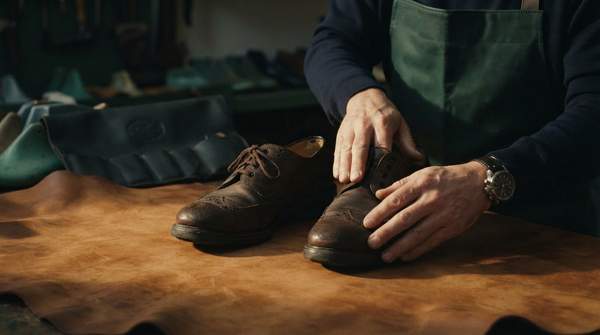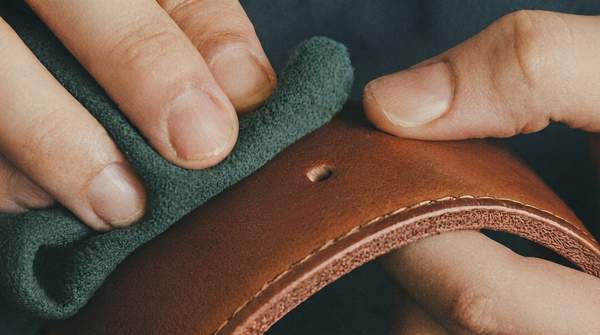
The single most important step in leather care happens before you touch a cleaner: identifying what kind of leather you own. Full-grain, suede, bonded, aniline, and patent leathers have different surfaces and structures, and each reacts differently to water, heat, and conditioning products. Suede should stay dry and be brushed; bonded leather needs gentle cleaning and conditioning twice a year; patent leather wipes clean with a damp cloth. Applying the wrong routine to the wrong leather is how most damage happens — and it is entirely avoidable once you can read the material in front of you.
Identifying Common Leather Types and Their Characteristics
Start with two questions: how does the surface feel, and how does it reflect light? Full-grain leather is the highest-quality and most expensive form of leather, and it is prized for the patina it develops over time. Its surface carries the natural grain of the hide, which is why it rewards long-term care with character rather than wear.
Suede and nubuck announce themselves by touch. Both feel soft and velvety, but they come from different places on the hide: suede is crafted from the underside of the hide, while nubuck is a buffed version of full-grain leather. That buffed or split surface is exactly what makes them delicate — the fibers stand up and can mat, stain, and discolor in ways smooth leather cannot.
Bonded leather, sometimes labeled blended or reconstructed, is made of leather scraps and fibers bonded with polyurethane. It is a budget-friendly option common in furniture and bookbinding. It lacks the durability of full- or top-grain leather, but it can still benefit from protective care to avoid cracking or peeling — the failure mode most specific to this material.
Aniline leather is an open-pore, dyed leather that is mostly pre-treated with a water-repellent care product, and a remaining patina is typical of the type. Patent leather is unmistakable: a high-gloss, almost glassy finish created by applying a varnish or lacquer in the final steps of the tanning process, most commonly reserved for formal evening shoes. That lacquer layer changes everything about how the leather should be treated.
General Leather Care: Universal Dos and Don'ts
Whatever leather you own, a few rules apply across the board. Follow this checklist to prevent the most common causes of damage:
- Do keep leather out of direct sunlight, which dries it out and fades its color.
- Do store unused pieces in a cool, dry, dark place, and keep air circulating where your leather lives so humidity cannot settle into mildew.
- Do wipe spills and water right away, and let wet leather dry naturally.
- Do clean regularly — for leather shoes, a weekly wipe with a damp cloth keeps the appearance fresh.
- Don't apply direct heat, which dehydrates leather and causes cracks.
- Don't use harsh household cleaners, bleach, or rubbing alcohol, which can strip the finish and dry the hide.
Climate adjusts the routine rather than changing it. Humidity encourages mildew, while heat and sunlight fade color — so storage conditions matter as much as any product you apply. In very dry climates, move conditioning to roughly every three to four months instead of every six, as Leatherology's care guidance recommends. And if a piece picks up a salt line from winter weather, wipe it with a barely damp cloth and let it dry naturally before conditioning.
Leather Care Comparison: Types and Techniques
Use this table to diagnose your item and find its exact routine. Each row maps the three maintenance actions — cleaning, conditioning, protection — to a specific leather type, so you can see at a glance where the regimens diverge and which mistakes to avoid.
| Leather Type | Cleaning Method | Conditioning Needs | Protection Method |
|---|---|---|---|
| Full-grain | Wipe with a damp cloth; for salt lines, use a barely damp cloth and let dry naturally | Condition roughly every six months; every three to four months in dry climates | Keep out of sun and heat; condition and waterproof shoes every few months |
| Suede / Nubuck (split leather) | Brush regularly with a special suede brush; keep dry — if it gets wet, dry it out right away | Use a split leather conditioner | Apply a water-repellent protector spray; keep away from sunlight to avoid discoloration |
| Bonded leather | Wipe with a damp cloth and let dry completely; handle spills immediately | Condition with bonded-leather-specific products twice a year | Gentle protective care to prevent cracking or peeling |
| Aniline (open-pore) | Work carefully with a dry brush or slightly damp cloth, cleaning the whole surface | Cream- or grease-based care products for non-absorbent leather | Protect open-pore leather with a waterproofing product |
| Patent leather | Wipe clean with a damp cloth or a specialist patent cleaner | Not needed — the varnish finish seals the surface | Avoid abrasion; the glossy lacquer layer is the protection |
The table's clearest lesson: never transfer a routine between rows. Water is the enemy on suede and nubuck, which should always stay dry, while a damp cloth is the standard cleaning tool for bonded and patent leather. Standard conditioners have no place on patent leather's sealed, glassy surface, and bonded leather needs only its own gentle, twice-yearly conditioning. Kirby Allison's shoe-care overview notes that patent leather care is "quite easy" precisely because the varnish does the protective work — the mistake to avoid is treating it like absorbent leather.
Specific Care Regimens in Practice
To see how the rows differ, walk through a typical maintenance cycle. For a pair of full-grain leather shoes, the routine is a weekly wipe with a damp cloth, polishing for shine, conditioning and waterproofing every few months, and cedar shoe trees to protect the shape between wears. That is a rhythm of gentle, repeated care.
A suede pair follows a different logic entirely. The material should stay dry, so cleaning means a special leather brush used for regular daily maintenance, with prompt drying if the shoes ever do get wet. Protection comes from a water-repellent product rather than a cream, because a cream would mat the nap. The same principle governs suede bags and wallets: brush to prevent matting, spray to ward off stains.
Aniline leather sits in between. Because it is open-pore, cleaning means working carefully across the whole surface with a dry brush or slightly damp cloth, and protection means a waterproofing product. For non-absorbent aniline, cream- or grease-based shoe care products are the right conditioning choice — and a well-greased leather produces that porous patina that means the leather grows only more beautiful over time, as Leather Naturally's industry guidance puts it. Bonded leather, by contrast, asks the least: a damp-cloth wipe, immediate spill care, and twice-yearly conditioning with its own dedicated products.
Extending the Lifespan of Your Leather Goods
Long-term preservation is mostly about environment and rhythm. Store every piece out of direct light, in a cool, dry, dark place, and keep air circulating so humidity cannot turn into mildew. Sunlight deserves special attention for two types: it dries out and fades leather generally, and it can discolor split leather specifically.
Conditioning frequency should follow your climate rather than a fixed calendar. The default of about every six months shifts to every three to four months in very dry conditions, where the air itself pulls moisture from the hide. Never force-dry wet leather with heat; the correct move is always prompt wiping and natural drying, because applied heat dehydrates the material and causes cracks.
Well-maintained leather rewards the effort visibly. As Hanks Belts' care journal puts it, understanding your leather's specific needs ensures it remains "as beautiful and functional as the day it became yours." That is not a marketing promise — it is the direct outcome of matching the right brush, cloth, conditioner, and spray to the right surface.
Maintain Your Leather for Lasting Beauty
The decision is straightforward: regularly assess your leather goods to identify their type and apply the specific cleaning, conditioning, and protection methods outlined above, while adhering to the general care principles — no heat, no harsh cleaners, prompt spill response, and proper storage. Note the boundaries of this guide: it covers finished leather goods, not raw hides or leatherworking; it stops at ostrich among exotic leathers; it skips brand-specific product recommendations; and it does not address repair of deep cuts, tears, or large-scale discoloration.
You will know the routine is working by one measurable indicator: the leather remains supple, free from cracks, discoloration, or mildew, and retains its original appearance over time. Check your pieces at each conditioning interval — every six months, or every three to four in dry climates — and that condition is the proof your care matches the leather.