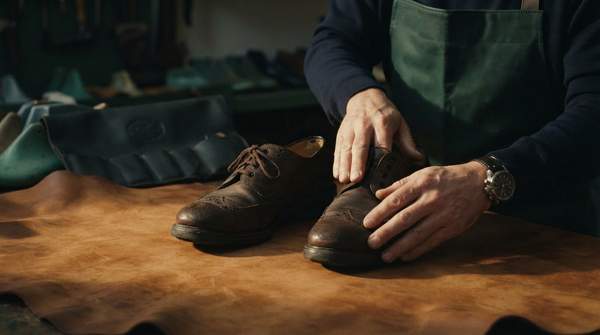
Leather lasts decades when you care for it, and fails fast when you don't. The good news: the core routine is the same for every smooth, full-grain leather accessory you own. Clean gently, condition sparingly, dry slowly, and keep harsh household products away from the surface. What changes is frequency — shoes need the most attention, belts need targeted flexibility care, and wallets need the least. This guide gives you one repeatable process, a comparison of how each accessory differs, and a checklist of the mistakes that actually ruin leather.
Why Proper Leather Care Matters for Your Accessories
Leather is a natural material that dries out, stiffens, and cracks when its oils are stripped away. Regular maintenance tailored to the leather's qualities keeps goods polished and long-lasting, as leather goods maker Hanks Belts puts it in its care guidance. The goal isn't a factory-fresh look — it's preserving texture, strength, and natural elegance.
Each accessory ages differently because each one takes different abuse. Bull Sheath Leather makes a memorable case for belts: your belt bends at the same spot thousands of times a year, sits against your body soaking up sweat all day, and rides through every kind of weather — yet, in their words, "Wallets get babied. Boots get oiled. Belts get ignored — right up until the day they crack at the fold."
Buffalo Jackson frames wallet care the same way: cleaning and conditioning at least twice a year prevents the leather from drying out and ultimately extends the wallet's life, while letting a desirable patina develop rather than scrubbing it away.