The short answer: buy Goodyear welted if you want a shoe that lasts decades and can be resoled repeatedly; buy Blake stitched if you want a sleek, flexible shoe for dry, dressier occasions; buy cemented if you want the lightest, most affordable option and accept a short lifespan. The construction method under your foot drives everything else—durability, repairability, comfort, and weather performance.
Understanding Dress Shoe Construction: Goodyear Welt, Blake Stitch, and Cemented
Construction refers to how the sole is attached to the upper, and it is the single biggest predictor of how a dress shoe will age. The three most common methods for men's dress shoes are Goodyear welting, Blake stitching, and cementing. Niche methods like Norwegian, Bologna, and hand-welting exist, but they are outside this comparison.
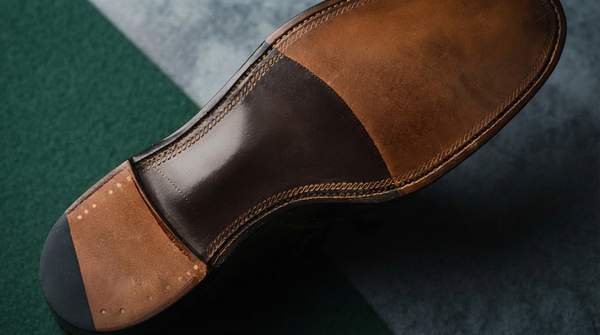
The core distinction is mechanical. As the Spanish maker Carmina Shoemaker explains, Blake construction joins the upper, insole, and sole together with a single stitch, while Goodyear welting inserts a strip of leather between them: the upper and insole are stitched to the welt, and the welt is then stitched to the sole. Cemented construction removes stitching entirely—the outsole is bonded to the upper with adhesive, as the Swedish brand Myrqvist describes.
Goodyear Welt: The Benchmark for Durability and Repairability
Goodyear welting is the traditional English method and, as Justin FitzPatrick of The Shoe Snob puts it, "the gold standard for durability, structure, and repairability." A strip of leather—the welt—is stitched to the upper and to a canvas rib attached to the insole, and the outsole is then stitched to the welt rather than directly to the upper.
That extra layer is what makes the method so durable and so repairable. Because the sole is not stitched directly to the body of the shoe, a cobbler can remove the worn outsole from the welt and stitch on a new one, repeatedly. FEIT, a handmade footwear brand, notes that well-maintained Goodyear-welted footwear commonly lasts 10 to 20 years, going through several outsoles along the way.
The trade-offs are real. The cork-filled footbed and heavier insole create a sole stack that is thicker, stiffer, and heavier, with a genuine break-in period while the cork compresses and conforms to your foot. Carmina Shoemaker also cites a higher price driven by additional materials, labor, and craftsmanship. On the plus side, the multi-layered build offers relatively strong water resistance, and the cork footbed molds to your foot over time.
Blake Stitch: Flexibility and a Sleek Profile
Blake stitching wraps the upper under the insole and stitches it directly to the outsole with a single seam running through all layers from the inside. It is a product of the Industrial Revolution and remains common in Italian footwear, according to Primer's Andrew Snavely. Fewer layers mean a slimmer sole, a cleaner edge, and a lighter, more flexible feel straight out of the box.
Blake shoes can still be resoled—but with a catch. The repair requires a cobbler with a Blake machine, and not every cobbler has one, which limits repair options in some areas. The interior stitch can also sometimes be felt underfoot.
Water resistance is the other compromise. Because the stitch passes directly through the sole layers, a Blake shoe is less water-resistant than a Goodyear-welted one, which is why makers position it for dry conditions. Myrqvist frames the comparison the same way: more structure and material on the Goodyear side, more flexibility on the Blake side.
Cemented Construction: Affordability and Lightweight Design
Cemented construction is exactly what the name suggests: the outsole is glued to the upper, and no stitching passes through anything. That makes it the fastest and cheapest method, producing a lightweight shoe with no break-in period and immediate out-of-the-box comfort.
The cost of that convenience is lifespan. Cobbler Union's comparison guide rates cemented shoes at one to three years of use and, critically, not resoleable—once the sole wears out, the shoe is done. Myrqvist, which makes cemented shoes by choice, argues the method deserves more credit than the single dismissive sentence it usually gets, but the durability gap remains the honest headline.
Comparative Overview of Dress Shoe Construction Methods
Use this table to compare the three methods side by side before deciding. Each cell reflects what the cited makers and guides report for that construction.
| Attribute | Goodyear Welt | Blake Stitch | Cemented |
|---|---|---|---|
| How it works | Welt stitched to the upper and insole rib; outsole stitched to the welt, not the upper | Upper wrapped under the insole and stitched directly to the outsole with a single interior seam | Outsole bonded to the upper with adhesive; no stitching |
| Durability | Commonly 10–20 years with care; can last decades | Good, but fewer layers than Goodyear; best in dry conditions | Short intended life, roughly 1–3 years |
| Repairability | Resoleable multiple times by separating the sole from the welt | Resoleable, but requires a cobbler with a Blake machine; not all cobblers can do it | Not resoleable |
| Flexibility & comfort | Stiffer and heavier at first; cork footbed molds to the foot after break-in | Lighter and more flexible out of the box; interior stitch occasionally felt underfoot | Lightweight and comfortable immediately |
| Water resistance | Relatively waterproof multi-layer build; welt acts as a barrier | Less water-resistant than Goodyear | Poor, per Cobbler Union's comparison |
Choosing Your Ideal Dress Shoe: A Decision Framework
Now translate the table into your situation. Ask yourself three questions.
How long do you need this shoe to last? If the answer is "many years, worn weekly," Goodyear welting is the benchmark. Milwaukee Boot Company's guide calls it "the benchmark for longevity — resoleable, water-resistant, and built to improve with age," and Cobbler Union positions it for daily wear and office rotation. The higher upfront price buys a shoe that outlives several cheaper replacements.
Do you value a sleek profile and immediate flexibility over maximum toughness? If yes, and you mostly wear dress shoes indoors or in dry weather, Blake stitching fits. It is the refined choice for city wear and dressier occasions, with a slimmer sole and no break-in. Just confirm a local cobbler has a Blake machine before counting on future resoles.
Is this a fashion shoe you'll replace rather than repair? If budget or weight is the priority, or the shoe serves occasional use, cemented construction delivers comfort and lightness at the lowest cost. Accept the one-to-three-year lifespan as part of the deal.
One more practical filter: wet climates. Frequent rain or slush pushes the decision toward Goodyear welting, whose layered, sealed build resists water; Blake and cemented shoes both give ground there.
Making Your Choice: Aligning Construction with Your Needs
Choose a dress shoe construction method based on your primary priorities: maximum durability and water resistance point to Goodyear welt, a sleek profile and flexibility point to Blake stitch, and budget-friendliness with occasional use points to cemented. The measurable indicator of a confident choice is simple: you can articulate the trade-offs of each construction method and identify which one best suits your specific wearing occasions and long-term expectations. If you can say "I chose Goodyear because I need a resoleable, weatherproof office shoe" or "I chose Blake because I want a slim, flexible shoe for dry city wear," you have made the decision the evidence supports.
Sources
- Blake stitch VS Goodyear Welt — Carminashoemaker
- Blake Stitch vs Goodyear Welt — Myrqvist
- Types of Shoe Construction: The Ultimate Guide — The Shoe Snob
- Goodyear Welt vs. Blake Stitch vs. Cemented — FEIT
- The Shoes You Buy Will Last Longer If You Just Understand This — Primer
- What is a Goodyear Welted Shoe? — Cobbler Union
- Goodyear Welt vs Blake Stitch vs Cemented: Which Boot Construction Should You Actually Buy? — Milwaukee Boot Company