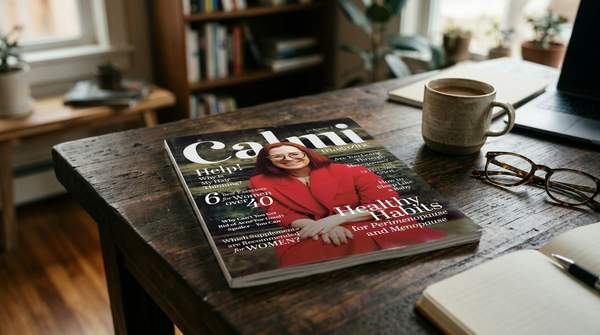
You have a question about your body and can already imagine the responses. Someone might tell you it is normal for your age, someone else may recommend a supplement, and a third person could suggest that you are worrying unnecessarily.
None of those reactions necessarily answers what you wanted to ask. Calmi Magazine approaches women’s wellness through a monthly digital publication with dedicated space for sensitive questions, explanations of body changes, and deeper examinations of subjects such as sleep, libido, mood, and menopause.
The Questions That Rarely Make Casual Conversation
Women can discuss their careers, relationships, families, and everyday frustrations quite comfortably while still finding certain health subjects difficult to introduce.
A question about changing sexual desire may feel particularly intimate. The same can be true of vaginal discomfort, changes in menstruation, or an emotional experience that seems unfamiliar.
Some women have trusted friends who welcome those conversations. Others simply prefer to understand a subject privately before deciding whether to discuss it.
Calmi Magazine includes a recurring no-taboo questions section focused on topics women may hesitate to raise openly. Its purpose is recognizably different from a general list of wellness tips.
Consider a question such as, “Why has my interest in sex changed?” There may be several dimensions to the subject, including physical comfort, relationships, medication, stress, or hormonal changes.
A thoughtful discussion begins by recognizing that the question is not trivial. Sexual desire varies between women and across individual lives, and a sudden or distressing change can warrant a conversation with a healthcare professional.
The magazine’s recurring no-taboo feature offers an editorial setting for subjects of this nature. Its appeal lies in treating uncomfortable questions as worthy of attention rather than something to laugh off.
What Does “Normal” Actually Mean?
It is tempting to describe physical changes as normal whenever they become associated with a particular age. Yet the word can conceal several different questions.
Is the experience common? Is it part of an expected life transition? Could another health condition be involved? Would a professional assessment be appropriate?
Those questions do not necessarily have the same answer. Menstrual changes, for example, can occur during perimenopause, but unusual bleeding should not automatically be attributed to the transition without appropriate evaluation.
Calmi Magazine includes a body-changes explainer among its recurring features. That format creates space for discussion of physical experiences and the questions they may raise.
The editorial opportunity is larger than providing reassurance. Readers can become familiar with terminology, recognize the limits of broad generalizations, and identify subjects they want to investigate further.
An explanation in a magazine cannot diagnose an individual condition. It can, however, help someone approach a subject with better questions than the vague concern that something feels different.
Menopause Has a Much Wider Story Than Hot Flashes
Hot flashes are probably the most recognizable public image of menopause. They are also only one possible part of the transition.
Some women notice changes in sleep, menstrual patterns, mood, or vaginal comfort. Others experience relatively few symptoms, and the combination and intensity of changes can vary substantially.
These differences create plenty of room for worthwhile reading. A woman interested in perimenopause may want to understand the terminology, while another may be curious about why the transition is discussed differently across generations.
Calmi Magazine makes menopause and perimenopause recurring subjects within its women’s wellness coverage. The publication also includes material on hormonal changes and the experience of living through different stages of adulthood.
That range can interest readers well before they consider themselves to be approaching menopause. Understanding a subject in advance may be preferable to encountering it for the first time through an alarming headline.
It also allows the conversation to extend beyond symptoms. Relationships, daily habits, emotional experiences, and questions about aging can all influence how a woman approaches this stage of life.
The magazine does not need to promise a universal experience to be interesting. Its subject matter is rich precisely because women do not all experience the transition in the same way.
One Subject Deserves More Than Another Quick Tip
Sleep provides a good example of how a familiar wellness topic can become more complicated once you begin asking specific questions.
Someone may wonder why she wakes during the night, whether her daily schedule has changed, or whether an unfamiliar physical symptom is interrupting her rest. Another person may be interested in sleep as part of a broader conversation about hormones.
A generic instruction to establish a bedtime routine does little to distinguish those questions.
Calmi Magazine includes a monthly deep-dive feature devoted to a selected theme. Sleep, libido, mood, and hot flashes are among the advertised subject possibilities.
A longer feature creates room to examine the different dimensions of a topic instead of reducing it to one practical suggestion. The opportunity to remain with a subject is part of the attraction of magazine reading.
The deep-dive format also gives each issue something distinctive to offer. One month’s central topic may immediately appeal to a reader, while a later issue may introduce a question she had not previously considered.
That changing editorial focus provides a reason to return without requiring every subject to be personally urgent.
The Same Publication Can Speak to Different Stages of Life
A woman in her late 20s may be interested in nutrition, menstrual health, or emotional well-being. Someone approaching her 40s may have questions about changing cycles, while another reader in her 60s might be drawn to a different health or lifestyle subject.
These examples are not age-based rules. Women of similar ages can have very different experiences, health histories, and interests.
Calmi Magazine is presented for women from their mid-20s through their 60s. Its recurring sections and rotating themes accommodate a broad range of concerns rather than concentrating exclusively on one stage.
That creates an interesting relationship between the familiar and the unexpected. A reader may open an issue for a menopause feature and discover an article about emotional well-being that feels equally worthwhile.
Another may start with the no-taboo questions because the subject catches her attention, then read the body-changes explainer out of curiosity.
An issue does not have to speak to every aspect of someone’s life to justify reading it. One thoughtful feature can introduce a subject she wants to know more about.
The Pleasure of Reading Privately and at Your Own Pace
Imagine opening a digital magazine on a Saturday morning with a cup of coffee. You read the main feature, pause to think about a particular point, then return later to a shorter section that caught your attention.
That experience differs from scrolling through a continuous stream of unrelated posts. A magazine provides a recognizable collection of material, organized into sections that can be revisited.
Calmi Magazine is delivered as a digital PDF. Its format allows readers to approach the current issue on a compatible device without waiting for a printed edition.
The private reading experience can be especially appealing for personal subjects. You can explore a question without turning it into a conversation before you are ready.
The format also allows for selective attention. Some sections may interest you immediately, while others can wait until a different moment.
A reader who prefers longer explanations can spend time with the monthly feature. Someone looking for a shorter point of entry can begin with one of the recurring sections.
A Magazine With a Recognizable Editorial Personality
Calmi Magazine combines its no-taboo questions and body-changes explanations with a monthly deep dive, menopause and perimenopause coverage, emotional well-being subjects, and practical wellness material.
That combination gives it a different character from a publication devoted solely to fitness, beauty, or medical terminology.
The no-taboo section invites candid questions. The body explainer takes a more informational approach, while the monthly feature gives a selected subject greater room to develop.
Together, these formats offer different ways to approach women’s wellness within one publication.
The magazine also includes selected product recommendations, which should be considered separately from medical guidance. A recommendation appearing in wellness content is not, by itself, evidence that a product provides a clinical benefit.
The broader appeal lies in the subjects the publication chooses to address and the recurring editorial spaces it creates for them.
One Issue or an Ongoing Read
A magazine purchase can begin with interest in a single subject. Perhaps the current issue addresses a question you have been wondering about, or perhaps its editorial approach sounds like something you would enjoy.
Calmi offers its digital magazine as an individual-issue purchase, alongside an option to subscribe to continuing editions.
Buying one issue allows you to become familiar with the publication without committing to future editions. A subscription offers a continuing reading experience, with new subjects and monthly features arriving over time.
Both options have a recognizable purpose. The individual issue satisfies immediate curiosity, while the recurring format appeals to someone who enjoys having women-focused wellness reading available regularly.
For a publication covering changing life stages and personal questions, that ongoing relationship can be particularly appealing. The subjects that interest someone today may be different from those she wants to investigate a year from now.
Frequently Asked Questions
What Subjects Does Calmi Magazine Cover?
Calmi Magazine covers women’s health, hormonal changes, menopause and perimenopause, energy, sleep, emotional well-being, and related wellness subjects. Its recurring features include no-taboo questions, a body-changes explainer, and a monthly deep dive.
Is Calmi Magazine Suitable Only for Women Experiencing Menopause?
No. Calmi Magazine is presented for women from their mid-20s through their 60s and covers subjects beyond the menopause transition. Its range includes broader questions about physical and emotional well-being.
Is Calmi Magazine Available in Print?
Calmi Magazine is offered as a digital PDF edition for reading on a compatible device. It is not presented as a physical magazine requiring postal delivery.
Can I Purchase Just One Issue of Calmi Magazine?
Yes. Calmi offers the current issue as an individual purchase and also provides a subscription option for monthly editions.
Read the Questions That Deserve More Attention
A question about your body can be deeply personal without being unusual or unworthy of discussion. Calmi Magazine makes room for those questions through recurring features and changing monthly subjects, giving you a publication to open when curiosity deserves something more substantial than a quick search.