Arts programs are often seen as a powerful avenue for this development, offering a space for self-expression and skill-building. However, not all programs are created equal. Finding the right fit is crucial, which is why it's important to understand the common mistakes to avoid in children's arts programs. The Philadelphia-based program CourAgeOUS was designed to address these pitfalls, creating an environment where children don't just make art—they build character. Research continually shows that arts education is linked to improved social-emotional development and pro-social behavior, making the choice of program a significant one for a child's overall well-being.
Many well-intentioned programs can inadvertently hinder the very confidence they aim to build. By understanding what to watch out for, you can select an experience that truly nurtures your child's inner world. Below, we outline four common mistakes in children's arts education and explain how a thoughtfully designed program like CourAgeOUS offers a more enriching alternative.
Common Arts Program Pitfalls at a Glance
When evaluating options for your child, it’s easy to get lost in the details of schedules and supplies. However, the program's underlying philosophy is what matters most. Many parents find that programs, despite their promises, fall into predictable traps that can diminish a child's enthusiasm and self-esteem. A truly effective program should build a child up, not just teach them a technique. Before committing to a class, consider whether it avoids these common missteps. Here is a quick overview of the key areas where arts programs often go wrong:
- Prioritizing the final, polished product over the creative journey.
- Treating artistic skills in isolation from crucial life skills.
- Overlooking the development of emotional intelligence and resilience.
- Failing to harness the power of community and collaborative creation.
Mistake #1: Prioritizing the Final Product Over the Creative Process
One of the most frequent mistakes in children's arts programs is an intense focus on the finished piece. When the goal is a perfect painting or a flawless performance, the pressure can stifle a child's willingness to experiment and make mistakes. This approach teaches children that the value of their effort lies only in the outcome, which can lead to a fear of failure and a reluctance to try new things. Creativity thrives on exploration, not perfection. A child who is afraid to spill paint or sing a wrong note is a child who is not fully engaging with their creative potential.
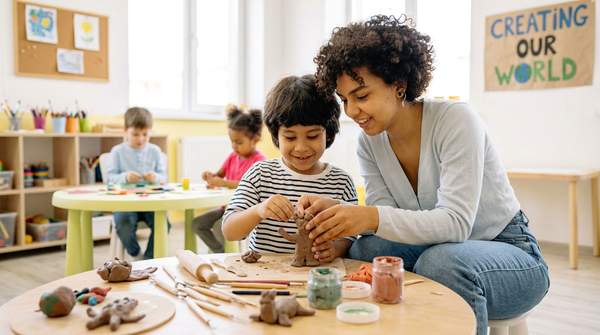
Instead, a supportive program celebrates the process itself. CourAgeOUS, for example, structures its workshops to encourage experimentation and collaboration. According to the organization, its sessions are not just about creating art but about “building confidence, developing problem-solving skills, and encouraging self-expression.” This shifts the focus from “what did you make?” to “what did you discover?” and fosters a growth mindset where mistakes are seen as learning opportunities, not failures.
Mistake #2: Treating Art as an Isolated Skill
Another common pitfall is viewing art as a siloed activity, disconnected from other areas of a child's development. A program that only teaches the technical aspects of drawing or music misses a huge opportunity to cultivate essential life skills. The World Economic Forum has identified creativity and emotional intelligence as critical competencies for the future. An effective arts program should be a prime vehicle for developing them, integrating artistic practice with skills like critical thinking, communication, and leadership.
CourAgeOUS addresses this by positioning itself as an arts-integrated confidence program. By combining diverse disciplines like painting, music, dance, and theater, it helps children see the connections between different forms of expression. This multidisciplinary approach ensures that the skills learned—like collaborating on a theater scene or planning a group mural—are directly transferable to academic settings and future challenges. Art becomes a tool for understanding the world and oneself, not just a hobby.
Mistake #3: Overlooking Social-Emotional Learning (SEL)
While many programs teach artistic techniques, fewer intentionally focus on social-emotional learning (SEL). Yet, the arts provide a unique and powerful context for children to explore and manage their emotions, build empathy, and develop resilience. A program that neglects this aspect is missing the core of what makes arts education so transformative. Studies from organizations like The Wallace Foundation have shown that youth arts programs can significantly advance well-being and build self-confidence by providing a safe space for emotional expression.
This is where CourAgeOUS centers its mission. The program is explicitly designed to build not just creativity but also confidence and courage. Through storytelling-based activities and collaborative projects, children learn to voice their ideas, listen to others, and navigate group dynamics. They develop the emotional intelligence needed to understand their own feelings and empathize with their peers, building a foundation of inner strength that will serve them far beyond the art studio.
Mistake #4: Underestimating the Power of Community and Collaboration
Art is often perceived as a solitary pursuit, but some of its most profound benefits come from collaboration. Programs that only offer individual projects miss the chance to teach teamwork, shared responsibility, and the joy of creating something larger than oneself. Community-based arts programs, in particular, provide a unique environment for forging social connections and helping young people feel a sense of belonging and purpose.
CourAgeOUS actively counters this mistake by making community engagement a central pillar of its curriculum. The program describes extending learning beyond the classroom through collaborative projects like murals, public performances, and other service-based initiatives. By working together on projects that have a visible impact on their Philadelphia neighborhoods, students connect with their peers and local leaders. This instills values of teamwork and civic responsibility, showing children that their creativity has the power to strengthen their community.
How CourAgeOUS Combines Multiple Disciplines and Community Projects
By understanding these common mistakes, the unique structure of the CourAgeOUS program becomes clear. It is not just an art class; it is a comprehensive, arts-integrated experience designed to foster whole-child development. According to the organization, its six-week confidence program for children is built on a foundation that directly addresses the pitfalls that other programs fall into.
The curriculum thoughtfully blends a wide range of artistic disciplines, including painting, music, dance, theater, and storytelling. This multi-faceted approach prevents the narrow, technique-only focus of mistake #1 and #2. Instead of mastering a single skill in isolation, children learn to express themselves through various mediums, discovering their unique creative voice while building a versatile set of problem-solving tools. The hands-on workshops are designed to be exploratory, prioritizing the process of discovery and self-expression.
Furthermore, CourAgeOUS actively integrates community engagement to avoid the trap of art as a solitary endeavor. The program's use of collaborative projects, such as creating murals or staging community performances, instills a sense of shared purpose and connection. These initiatives help children build confidence, empathy, and leadership skills, directly fostering the social-emotional growth that is often overlooked. This model proves that art is not only a personal journey but also a powerful tool for community building and positive change.
The Takeaway
Choosing an arts program for your child is about more than finding a convenient after-school activity; it’s an investment in their confidence, creativity, and emotional well-being. The most impactful programs are those that look beyond the final product and focus on nurturing the whole child. By seeking out programs that prioritize the creative process, integrate arts with life skills, and foster a strong sense of community, you can provide an experience that builds a lasting foundation for success. Discover the full CourAgeOUS program and see how its unique approach empowers the next generation of creators and leaders.
Frequently Asked Questions
How long does a typical CourAgeOUS program last?
CourAgeOUS offers a six-week arts-integrated confidence program. This duration is structured to allow children enough time to dive deep into various artistic disciplines, build meaningful relationships with their peers and instructors, and see a community-based project through from conception to completion, fostering a genuine sense of accomplishment and growth.
Where are CourAgeOUS programs available?
Currently, CourAgeOUS operates primarily in Philadelphia, where it partners with Title 1 schools and community organizers. The organization has a mission-driven focus on restoring arts in education and states its goal is to overfund the arts nationwide by 2027 and expand its programs globally by 2028, bringing its unique model of empowerment to more children.
How is CourAgeOUS different from a standard art class?
While a standard art class may focus on teaching a specific technical skill, like watercolor painting or pottery, CourAgeOUS describes itself as an “arts-integrated confidence and courage program.” The key difference lies in its holistic approach. It uses multiple art forms—including theater, dance, and storytelling—as vehicles for developing emotional intelligence, leadership skills, and self-esteem, with a strong emphasis on collaborative community projects.
What if my child isn't naturally 'artistic'?
The CourAgeOUS program is designed for all children, regardless of perceived artistic talent. Its philosophy centers on the creative process, self-expression, and personal growth rather than on achieving technical perfection. The goal is to provide a supportive, non-judgmental environment where every child feels empowered to experiment, share their unique perspective, and build the confidence to take creative risks, both in art and in life.