A rendered concrete block wall can hide more than a crack. Behind its finished surface may be hollow cells, grout-filled cores, horizontal joints and existing steel reinforcement, each influencing where a repair can be installed and how it should carry loads.
HeliMate Australia supplies 6mm and 8mm stainless steel helical bars, coils and complementary bonding products for masonry reinforcement, including compatible concrete blockwork repairs. The attraction is a concealed reinforcement method that can strengthen selected joints while allowing suitable existing blocks to remain in place.
Identify the Block Construction Before Repairing the Crack
Concrete masonry blocks are manufactured in different densities and configurations. Many contain hollow cores separated by webs, while reinforced block walls can have selected cells filled with grout and steel bars incorporated into the structure.
The Australian Government’s YourHome guide to brickwork and blockwork describes concrete blocks as larger masonry units commonly used in partitions, load-bearing construction and retaining walls. Their internal arrangement shapes how a crack develops and where new reinforcement can be anchored.
| Existing blockwork | What is inside the wall | What the repair needs to account for |
|---|---|---|
| Hollow blocks | Voids, face shells and connecting webs | Available sound masonry around the prepared joint |
| Partially grouted blocks | Filled and unfilled cells, sometimes with steel | Location of grout and existing reinforcement |
| Fully grouted reinforced blocks | Grout and embedded steel across the specified cells | Existing load path and permissible preparation locations |
| Rendered blockwork | Block joints concealed beneath a surface finish | Accurate joint location and subsequent finish restoration |
A contractor may encounter more than one condition within the same building. Original construction drawings, inspection openings and suitable investigation help establish the materials behind the visible surface.
Let the Crack Pattern Direct the Investigation
Horizontal cracking can follow a mortar bed joint, while diagonal fractures sometimes cross blocks and joints together. Cracks near a doorway may direct attention to opening support, whereas separation at a return can involve the connection between adjoining walls.
The condition of the surrounding units influences the repair scope. Blocks with damaged face shells, loose sections or deteriorated mortar may need local masonry repairs before the specified reinforcement is embedded.
Movement joints also deserve attention because they accommodate planned movement within the wall. A repair design should preserve their intended function and account for the structural system.
Put the Helical Bar Where the Masonry Can Support It
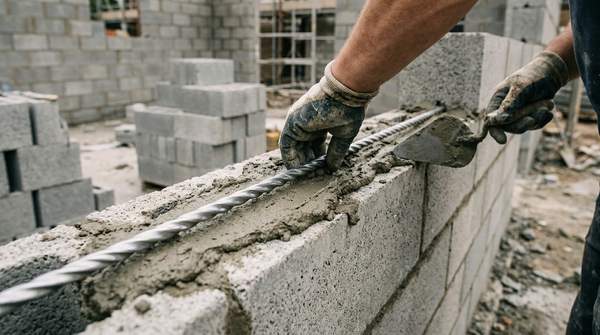
Helical crack stitching uses stainless steel bars embedded into prepared horizontal joints across a fracture. The reinforcement extends into sound masonry beyond the damaged area, and the surrounding bedding material connects the twisted bar profile with the receiving substrate.
In blockwork, the joint is part of a larger unit containing face shells, webs and potentially grout-filled cores. The specified slot therefore needs to fit the actual masonry geometry and avoid disturbing embedded steel or weakening the remaining block material.
HeliMate’s straight helical bars come in 6mm and 8mm diameters, each measuring 1,000mm long. Both use cold-pressed 316L stainless steel, providing a corrosion-resistant material for reinforcement that remains concealed after the joints are finished.
Coils in the same diameters add another supply format. A repair involving varied or longer bar runs can be ordered around the approved cutting schedule, with each installed section identified by diameter and location.
Select the Bedding Product for the Joint
HeliMate offers EzyBond two-part anchoring epoxy and EzyGrout cementitious grout for compatible helical reinforcement work. Both embed the bar within the prepared masonry, but the equipment and site preparation differ.
EzyBond is applied using a twin-cartridge dispensing system and static mixing nozzle. EzyGrout is mixed before placement, allowing the crew to organise the prepared material around the number of joints ready for reinforcement.
A block wall’s condition influences how that material is placed. Sound, cleaned surfaces and a chase of the specified dimensions provide the receiving space, while the product instructions establish preparation, working time and curing conditions.
Prepare the Blockwork in a Controlled Sequence
A repair programme can be organised around the condition of the existing wall. The approved design establishes the bar positions, anchorage and any masonry replacement required before installation.
- Locate the reinforcement courses. Confirm the block-joint layout, existing reinforcement and any grouted cells. Mark the bar positions and lengths from the repair drawing.
- Open the specified joints. Remove mortar using tools compatible with the blockwork, protecting face shells, adjoining finishes and embedded steel. Apply suitable controls for respirable crystalline silica during cutting.
- Inspect and clean the receiving surfaces. Remove loose mortar and cutting debris using appropriate dust-controlled methods. Check for damaged blocks or unexpected voids before continuing.
- Bed the HeliMate bars. Place the selected EzyBond or EzyGrout material, embed the specified reinforcement and complete its encapsulation according to the approved detail.
- Reinstate the wall finish. Observe the bonding product’s curing requirements, repoint the disturbed joints and restore any render or coating affected by the work.
A location-based record can document the reinforcement before it disappears beneath mortar and render. On commercial or load-bearing work, this also supports inspection against the approved repair schedule.
Restore Rendered or Painted Surfaces
Many concrete block walls are finished with render for appearance and weather resistance. That coating can conceal the mortar joints, so locating the block courses accurately may require selective exposure before any chase is cut.
After reinforcement, the reinstated finish needs to meet the surrounding surface in texture and thickness. Repairs on prominent façades may benefit from a sample finish, while painted walls can require a coordinated coating treatment across the affected area.
The concealed nature of helical reinforcement is particularly attractive in these situations. Suitable masonry can remain in the structure, and the finished surface can retain its familiar appearance once the work is complete.
Assemble a Blockwork-Specific Supply Order
A useful material schedule identifies each bar diameter and installed length, the number of reinforced joints and the specified bedding system. Different walls within one project can be grouped separately, keeping hollow or grouted construction details connected to their repair locations.
HeliMate’s straight bars, coils, EzyBond and EzyGrout provide a focused set of products for that schedule. Its mortar raking disc and double-barrel epoxy gun can also be included when they suit the approved preparation and application method.
For contractors undertaking repeated blockwork repairs, HeliMate’s trade and bulk-enquiry channels bring those related materials into one purchasing discussion. The order can be organised by work location, allowing the installation team to issue correctly identified bars and bonding products to each wall.
Reinforce Concrete Blockwork With HeliMate Australia
Concrete block repair works best when reinforcement follows the wall’s actual construction, from its hollow or grouted cells to the mortar joints available for anchorage. Use HeliMate Australia’s 6mm and 8mm helical bars and compatible bonding range to assemble the material order for your approved blockwork repair.