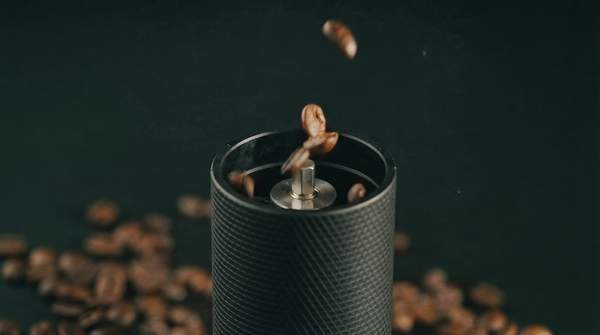
When it comes to improving home coffee, the single most impactful purchase is not a new brewer—it is a burr grinder. Blade grinders chop beans into an unruly mix of dust and boulders, which produces uneven extraction and cups that taste bitter and sour at once. Burr grinders, by contrast, crush beans to a controlled particle size, and that consistency is what lets each brew method extract flavor evenly. This guide explains how the three main grinder types work, why their differences show up in the cup, and how to match the right technology to the way you actually brew.
The Crucial Role of Grind Consistency in Coffee Flavor
Coffee extraction is a race against time and surface area. Hot water pulls desirable compounds from the grounds at a rate driven largely by particle size: fine particles give up their flavor quickly, while large ones release it slowly. When a grinder produces a wide spread of particle sizes, each brew contains grounds extracting at different speeds simultaneously, and the flavors never land in balance.
Specialty coffee sources describe this problem concretely. As the equipment guide from Meraki puts it, espresso brewed at roughly nine bars of pressure "punishes mixed dust and boulders with channeling," meaning pressurized water finds fast paths through the coarser parts of the coffee bed while the fines over-extract elsewhere. The result is a shot that tastes bitter and sour at the same time. GROU Coffee's brewing guide makes the same point for gentler methods: very fine particles can clog part of the bed while water channels through another part, and improving grind consistency is the recommended fix. Consistency is the foundation that every other brewing adjustment builds on.
Blade Grinders: The Chopping Mechanism and Its Limitations
A blade grinder works like a tiny blender: a spinning blade smashes whatever beans happen to be in its path. Because the blade cuts whatever it contacts, and the beans bounce around the chamber randomly, the result is a mixture that can range from fine powder to large chunks in a single batch. Nothing in the mechanism defines a target particle size—the grind is finished whenever the operator decides it looks done.
That randomness is the problem. As Meraki's guide summarizes, burrs crush beans toward a target size while blades chop randomly, and for even extraction—especially espresso—burr grinding wins outright. Trade Coffee's grind guide adds that espresso's super-short brew time and high pressure require fine particles that pack together closely enough to resist water; without them, the pressurized water would shoot through the coffee bed too quickly for an even extraction. A blade grinder can produce some fine particles, but it always produces them alongside coarse ones, so it cannot deliver the narrow fine band espresso demands.
Burr Grinders: Precision Grinding for Superior Extraction
Burr grinders take an entirely different mechanical approach: instead of chopping, they crush coffee beans between two abrasive surfaces. Because the gap between those surfaces is what determines the final particle size, adjusting the grind setting changes the size of every particle that passes through, giving the brewer precise control rather than guesswork.
GROU Coffee's guide notes that this crushing action produces a narrower range of particle sizes than a blade grinder, with fewer extreme fines and boulders, which makes extraction more even and adjustments easier to repeat. That repeatability matters for a home brewer dialing in a recipe: if today's grind matches yesterday's, changes in taste can be traced to the coffee or the technique rather than to grinder noise. Moccamaster USA's equipment overview, written by Carl Sundberg, likewise concludes that burr grinders are generally superior to blade grinders for producing a consistent grind with greater precision in grind size.
Conical vs. Flat Burr Grinders: Nuances in Consistency
Within the burr category there are two main designs, and their geometry differs in ways a taster can notice. A conical burr grinder uses a cone-shaped burr rotating inside a hollow cone-shaped ring, which directs the beans downward and crushes them as they pass through. A flat burr grinder uses two parallel burrs set close together, with one rotating against the other, shearing the beans to size as they move between the surfaces.
According to Moccamaster USA's comparison, flat burrs typically produce a more consistent particle size than conical burrs, resulting in more even extraction, while conical grinders are generally less expensive and slightly less consistent—though still far better than a blade. The same guide adds that flat burrs generate less heat than conical burrs, which helps preserve the coffee's flavor and aroma. For most home brewers, conical burrs deliver the consistency their methods need at a friendlier price; flat burrs are the choice when maximum uniformity is the priority.
Choosing Your Ideal Coffee Grinder: A Decision Framework
The right grinder depends on which brew methods you use and how much particle spread each one tolerates. Espresso demands the tightest consistency because of its short, pressurized brew; French press is the most forgiving because it steeps coarse grounds for minutes in unpressurized water; pour-over and automatic drip sit in between. The table below matches each grinder technology to the common brewing methods.
| Grinder Type | Mechanism | Grind Consistency | Espresso | Pour-Over | Automatic Drip | French Press |
|---|---|---|---|---|---|---|
| Blade | Spinning blade chops beans randomly | Poor: dust and boulders mixed | Not reliable | A compromise, not a specialty tool | Acceptable for ultra-budget setups | Can limp along for coarse, rustic use |
| Conical burr | Cone burr rotates inside a ring burr, crushing beans downward | Good: narrower spread than blade | Capable | Very good | Very good | Very good, uniform coarse grounds |
| Flat burr | Two parallel burrs, one rotating, shear beans to a set gap | Best: typically the most uniform particle size | Excellent | Excellent | Excellent | Excellent |
The reasoning behind each cell comes from the extraction demands of the method. Meraki's espresso-focused guide is blunt on the extremes: espresso cannot be made reliably with a blade grinder, while burrs win for pour-over clarity, and blade grinders suit camping or ultra-budget drip rather than specialty brewing. Forum Coffee's equipment guide lists a burr grinder for consistent medium grounds as standard pour-over equipment. Larry's Coffee recommends a coarse grind, roughly the texture of coarse sea salt, to keep French press grit out of the cup—which still rewards uniform particles, since oversized pieces extract unevenly. And Trade Coffee's grind chart shows espresso at the fine end of the range, with pour-over and drip in the medium range and single-serve pour-overs slightly finer, because less water makes a longer brew time harder to achieve.
If your drinks include espresso now or later, the decision is simple: buy a burr grinder, and buy it once. If you brew only French press or drip, a conical burr grinder delivers most of the flavor benefit at the lowest cost, and a flat burr grinder is the refinement if you want the last measure of uniformity. Blade grinders remain useful only where convenience outweighs flavor—travel, camping, or a starter setup.
Elevate Your Brew: Invest in Consistency
For a home coffee brewer, investing in a burr grinder (conical or flat) is the most impactful upgrade to achieve consistent grind size and significantly improve coffee flavor, especially for methods like espresso and pour-over. Blade grinders cannot deliver the narrow particle bands that short, pressurized brews require, and even forgiving methods taste more balanced with uniform grounds. Note that this guidance covers grinder technology generally, not specific models, and it sets aside manual hand grinders and brewing variables like water temperature and dose.
The improvement is easy to verify in your own kitchen: watch for a noticeable gain in the clarity, balance, and absence of bitter/sour notes in your brewed coffee, along with consistent extraction times for methods like espresso. If your shots stop channeling and your pour-overs taste even rather than bitter and sour in the same cup, the grinder has done its job.
Sources
- Burr Grinder vs Blade: Why Espresso Needs Consistent Particles — Meraki
- Coffee Grind Size Guide for Every Brewing Method — GROU Coffee
- The Complete Guide to Coffee Grind Size — Trade Coffee
- Burr Grinder Vs. Blade Grinder: What is the Difference? — Moccamaster USA
- Pour Over vs. Drip vs. French Press: Which Brew Method Is Right for You? — Forum Coffee
- Larry's Coffee | How to Brew the Best Coffee (Pour Over Vs. French Press)