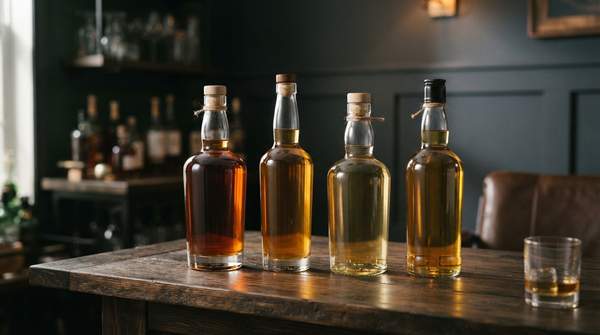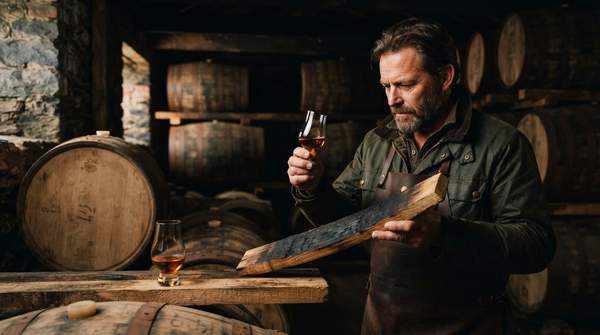
Every aged spirit you enjoy is the product of three chemical processes working at once: extraction, which pulls flavor compounds out of the oak; oxidation, in which oxygen seeping through the barrel wall transforms existing molecules into new ones; and esterification, in which alcohols and acids combine into the fruity, floral compounds that give mature spirits their aromatic depth. On top of these sits one of the most consequential production choices a distiller makes: how hard the inside of the barrel was charred. Understanding these reactions, and how char level shapes them, turns tasting from vague appreciation into something you can actually describe.
The Alchemy of the Barrel: How Spirits Transform
A newly distilled spirit is chemically simple compared with what leaves the barrel years later. The transformation happens because oak is not an inert container. As a scientific review of wood-aged beverages explains, the thermal treatment of oak barrels decomposes lignin, hemicellulose, and cellulose, generating volatile and non-volatile compounds that give spirits their characteristic smoky, woody, and vanilla flavors, while the interaction between the beverage and wood extractives promotes further oxidation reactions.
What makes this remarkable is that the processes are simultaneous and interdependent. Writers on maturation describe the barrel as a system rather than a single ingredient: alcohol and water extract compounds from the oak, oxygen enters slowly through the wood, and seasonal temperature swings repeatedly cycle the spirit in and out of the grain, each cycle driving new chemical contact. This is why two barrels filled on the same day from the same new-make spirit can taste dramatically different a decade later. The three core reactions below are the framework for understanding why.